Less effort = more fat burning?


In this article, we will discuss heart rate, sweat, workout efficiency, and calorie burn. More specifically, why most of what people think they know about these things turns out to be only half the story.
The fitness industry has been selling one idea for years: more sweat = more results. The research tells a completely different story. And it’s a much more enjoyable one.
2 types of muscle fibers, 2 very different outcomes.
Your body has 2 types of muscle fibers, and they work differently. The first type fires when you’re sprinting or jumping at full intensity. It gives a powerful burst and burns carbohydrates. The second type fires during steady controlled exercise when your heart rate stays in a comfortable zone. And that second type runs on fat. Simply put: the calmer and more controlled your workout is, the more fat you burn.
A study in the Journal of Applied Physiology found that slow-twitch muscle fibers have 4 times more mitochondria than fast-twitch fibers. Mitochondria are the cells that burn fat. Slow fibers are literally better equipped for fat burning.
Now let’s talk about sweat.
Sweat is your body’s cooling system, not a measure of how effective your workout is. You can sweat through an entire hour of intense cardio and burn less fat than in 30 minutes of slow, controlled movement. And here’s another thing worth knowing: the weight you lose during an intense workout is mostly water. It comes back after your first glass. Actual fat burning happens during the slow workout inside your cells and continues for hours after the workout ends.
What’s the difference between a ballerina and a sprinter?
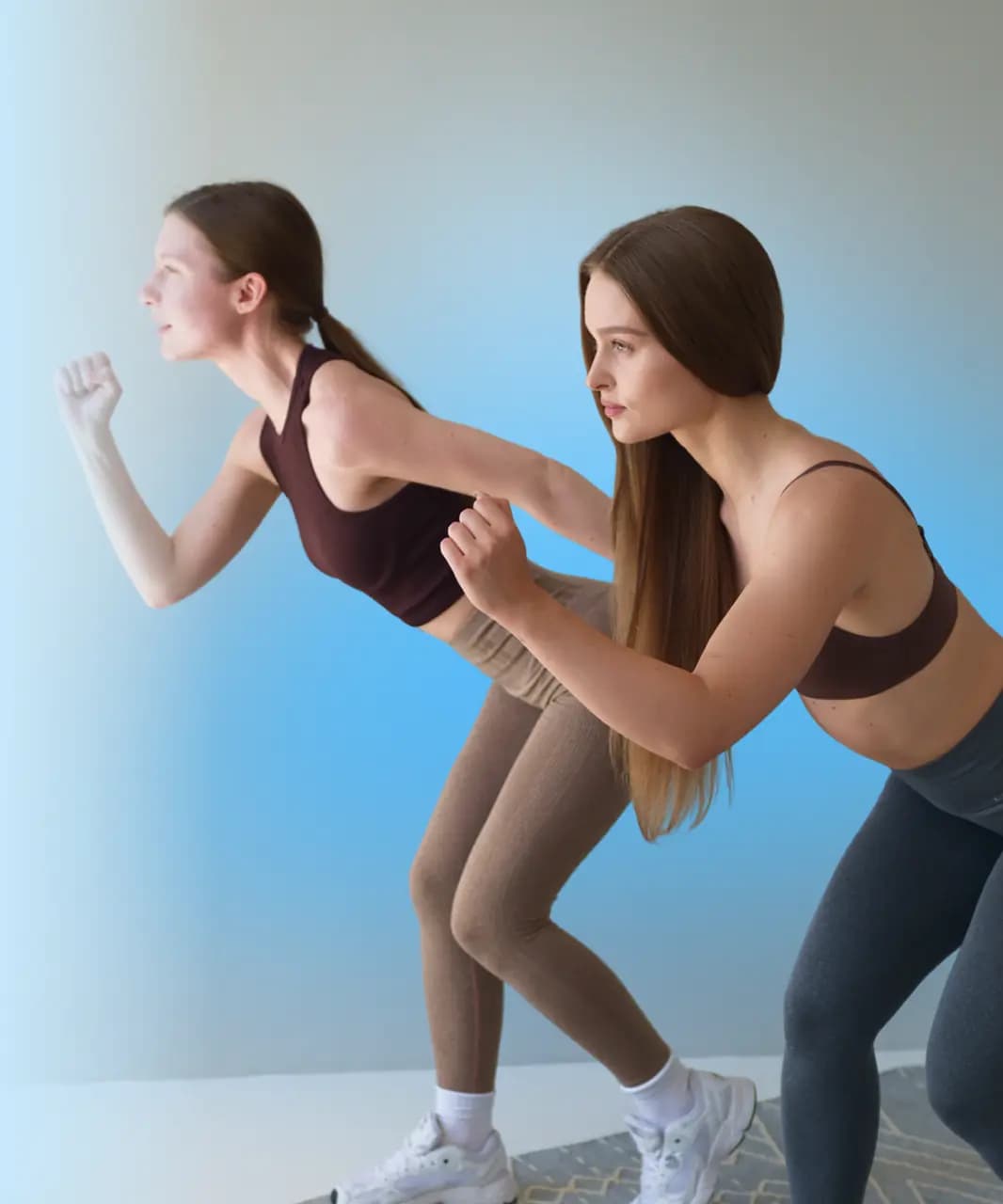
A sprinter trains at maximum heart rate and gets roughly half their energy from carbohydrates rather than fat, plus loses a lot of fluid through sweat. A ballerina moves in a moderate heart rate zone and gets up to 70% of her energy from fat. Slow controlled movements with an emphasis on time under tension also build the long lean shape that defines a silhouette rather than just adding bulk.
Have you ever noticed that after very intense workouts, your appetite spikes and your results in the mirror stay the same for months?
Here’s why intensity can work against you.
Intense cardio and HIIT have real benefits for your cardiovascular system. But they also raise stress levels, increase appetite after training, and speed up fatigue. A body that regularly experiences high-intensity loads starts holding onto fat as a protective response. It’s one of the most common paradoxes in fitness: the harder you train, the harder it becomes to get results long term.
A true measure of effectiveness is the controlled workout, not sweat.
Slow training burns fat.
When your heart rate stays in a moderate zone (around 120 to 140 beats per minute), your body operates in fat-burning mode rather than survival mode. Appetite stays stable after the session, and your muscles get enough stimulus through time under tension. And the best part: fat burning continues not just during the workout but for several hours after it ends.
After the first slow session, your body already starts working differently. Open the workout and let’s go! We’re here, with you!
Want to go deeper on fat burning and training?
The gFit blog has detailed material on how your body responds to different types of load.
read the blogalso you might like
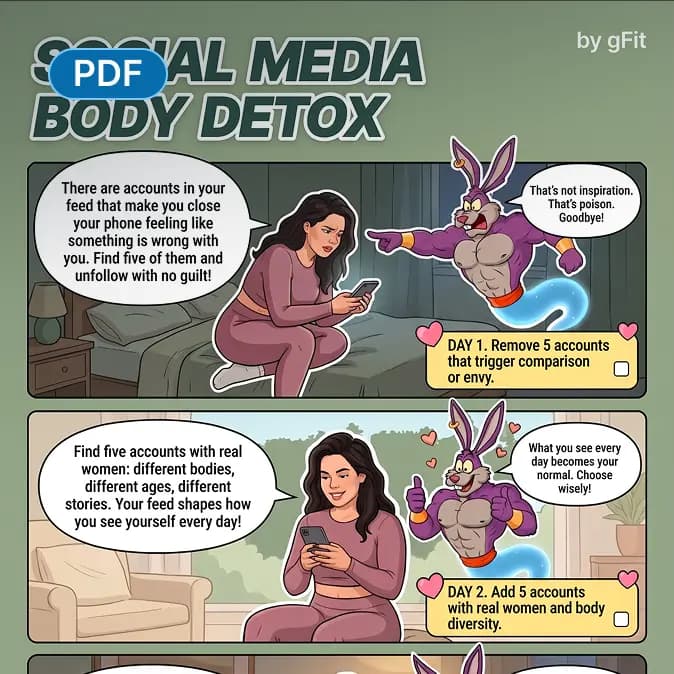
Your Complete 28-Day Longevity Toolkit
In this PDF, we'll dispel fitness myths and give you a step-by-step system to finally escape the frustrating cycle of 'starting and quitting'.
Download PDFYou don't need 21 days to build a habit. You need 5.
Coaches, motivational speakers, and self-help authors have been repeating the same rule for decades: do something 21 times, and it’s wired into your brain forever. That rule is why millions of people feel like failures when they drop a new habit on day 22. And it’s why most people give up on themselves before their brain has had a real chance to build anything.
Go to article
Don’t want to miss anything?
Get weekly updates to the newest design stories, case studies and tips.